
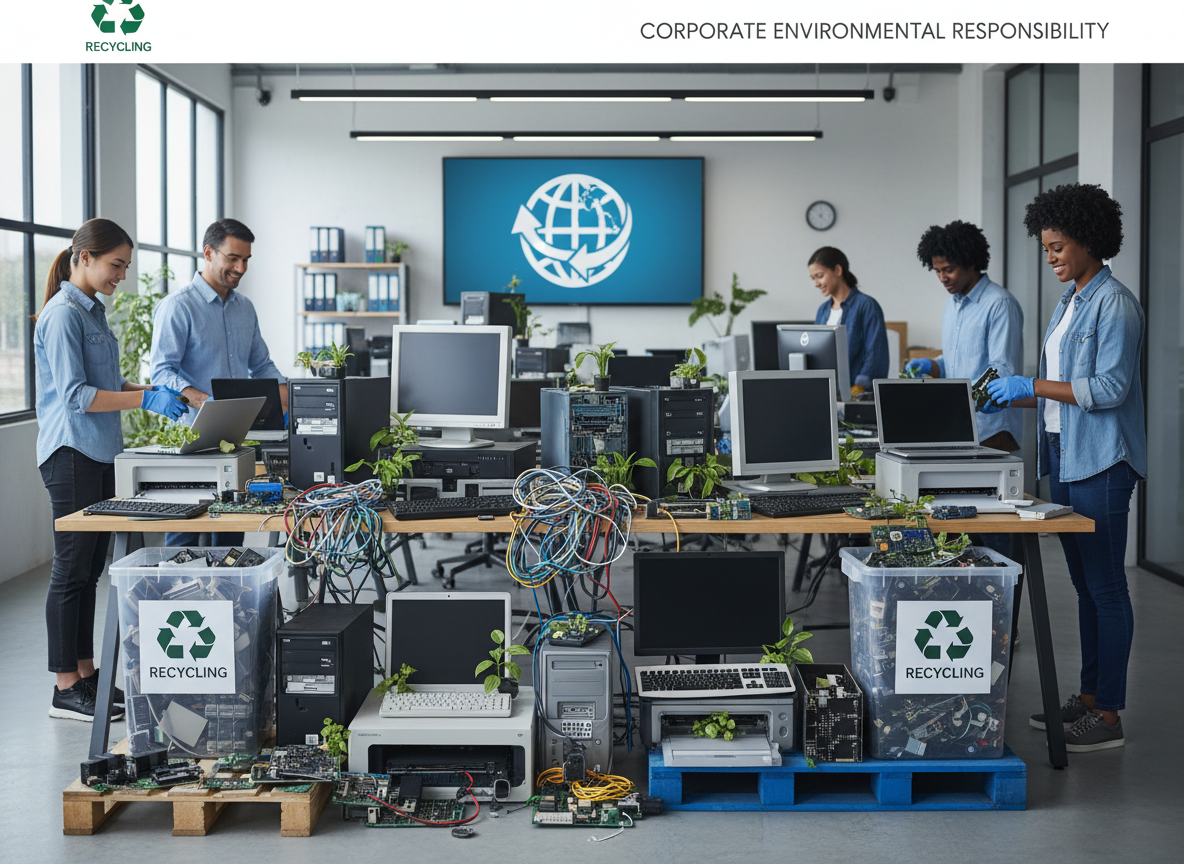

Every year, millions of tonnes of discarded computers, mobile phones, printers, and other electronic equipment pile up in landfills across the globe. The environmental and health consequences of improper disposal are staggering, yet many organisations remain unaware of their legal obligations and the positive impact responsible E-Waste Recycling can have on our planet. This comprehensive guide explores the critical importance of proper electronic waste management, the regulatory framework governing it, and practical steps your organisation can take to become part of the solution.
Understanding Electronic Waste: A Growing Global Crisis
Electronic waste, commonly referred to as e-waste, encompasses any discarded electrical or electronic equipment. From obsolete desktop computers and defunct servers to broken keyboards and outdated mobile devices, the volume of e-waste generated globally has reached alarming proportions. The United Nations estimates that the world produces over 50 million tonnes of e-waste annually, with only a fraction being properly recycled or disposed of through compliant channels.
The composition of electronic equipment makes improper disposal particularly hazardous. Circuit boards contain precious metals like gold, silver, and platinum, alongside toxic substances including lead, mercury, cadmium, and brominated flame retardants. When electronic devices end up in landfills, these hazardous materials can leach into soil and groundwater, contaminating ecosystems and posing serious health risks to communities. The scale of this problem demands urgent action from businesses, institutions, and individuals alike.
What makes the e-waste crisis particularly challenging is the rapid pace of technological advancement. As devices become obsolete faster than ever before, the replacement cycle accelerates, generating ever-increasing volumes of discarded equipment. Smartphones that were cutting-edge two years ago now languish in desk drawers. Computer systems that powered businesses just five years ago are now considered inadequate for modern software demands. This relentless cycle of consumption and disposal places enormous pressure on our planet’s resources and waste management infrastructure.
The economic implications are equally significant. Electronic equipment contains valuable raw materials that, when properly recovered through electronic waste recycling, can be reintroduced into manufacturing supply chains. The failure to capture these materials represents not just an environmental loss but an economic one, squandering resources that required substantial energy and effort to extract and refine in the first place.
The WEEE Directive: Legal Framework for Responsible Disposal
The Waste Electrical and Electronic Equipment (WEEE) Directive represents the European Union’s comprehensive legislative response to the e-waste crisis. Transposed into UK law, this directive establishes clear responsibilities for producers, distributors, and end users of electrical and electronic equipment. Understanding these obligations is not merely a matter of regulatory compliance; it reflects a fundamental duty of care towards environmental protection and public health.
The WEEE Directive categorises electrical and electronic equipment into several distinct groups, including large household appliances, IT and telecommunications equipment, consumer electronics, lighting equipment, electrical tools, toys and leisure equipment, and medical devices. Each category carries specific handling and disposal requirements, reflecting the varied materials and potential hazards associated with different device types.
For organisations, the directive imposes clear obligations. Businesses must ensure that WEEE is collected separately from general waste streams and delivered to authorised treatment facilities. Simply placing old computers in standard waste bins is not just environmentally irresponsible; it constitutes a breach of legal requirements that can result in significant penalties. The legislation requires that electronic equipment be treated by facilities holding appropriate environmental permits, ensuring that hazardous components are safely managed and valuable materials are recovered for reuse.
The directive also establishes producer responsibility, requiring manufacturers and importers to finance the collection, treatment, and recovery of WEEE. This extended producer responsibility principle recognises that those who place electronic equipment on the market bear responsibility for its entire lifecycle, including end-of-life management. For end users, this system provides access to compliant disposal routes, often at no additional cost.
Compliance with the WEEE Directive extends beyond simple disposal. Organisations must maintain records demonstrating that their electronic waste has been transferred to authorised facilities. Waste transfer notes provide an audit trail, documenting the movement of WEEE from your premises to licensed treatment centres. These records serve as proof of compliance, protecting your organisation from potential liability and demonstrating your commitment to environmental responsibility.
Environmental and Health Impacts of Proper E-Waste Management
The benefits of responsible ewaste recycling extend far beyond regulatory compliance. Proper management of electronic waste delivers measurable environmental benefits, conserves natural resources, and protects human health. Understanding these impacts helps organisations appreciate why investment in compliant disposal systems represents money well spent.
When electronic equipment is processed through authorised recycling facilities, hazardous materials are safely extracted and managed. Lead from cathode ray tubes and circuit boards is prevented from contaminating soil and water. Mercury from fluorescent backlights and switches is captured rather than released into the environment. Brominated flame retardants, which can persist in ecosystems and accumulate in living organisms, are properly handled rather than allowed to spread through improper disposal.

The resource conservation benefits are equally compelling. Electronic devices contain significant quantities of valuable materials. A tonne of circuit boards can yield more gold than a tonne of gold ore. Copper, aluminium, and steel recovered from electronic equipment can be reprocessed and reintroduced into manufacturing, reducing the need for virgin material extraction. This circular approach to resource management reduces the environmental impact of mining, decreases energy consumption in manufacturing, and helps preserve finite natural resources for future generations.
Proper e-waste recycling also addresses the growing problem of plastic pollution. Electronic equipment contains substantial amounts of plastic, much of it high-quality engineering polymer suitable for recycling into new products. When processed correctly, these plastics can be recovered and reused, diverting them from landfills and reducing the demand for petroleum-based virgin plastic production.
The health benefits of proper electronic waste management are particularly significant for vulnerable populations. In regions where informal e-waste processing occurs, workers and nearby communities face exposure to toxic substances through burning, acid leaching, and manual dismantling of equipment. Children are especially vulnerable to the neurotoxic effects of lead and mercury. By ensuring your organisation’s electronic waste is processed through authorised facilities with proper environmental controls, you help reduce the global burden of e-waste-related health impacts.
Climate change mitigation represents another important benefit. The energy required to extract and refine virgin materials far exceeds that needed to process recycled materials. By supporting effective recycling systems, organisations reduce the carbon footprint associated with their technology consumption. Some estimates suggest that recycling electronic equipment can reduce greenhouse gas emissions by up to 90% compared to manufacturing from virgin materials.
Implementing Effective E-Waste Management in Your Organisation
Establishing a robust electronic waste management system requires planning, clear procedures, and engagement from across your organisation. The following framework provides a practical approach to implementing compliant and effective e-waste handling.
Begin with a comprehensive audit of your electronic equipment inventory. Identify all devices that will eventually require disposal, from desktop computers and laptops to printers, scanners, monitors, keyboards, mice, and networking equipment. Don’t overlook smaller items like mobile phones, tablets, USB drives, and cables. This inventory provides the foundation for planning your disposal requirements and estimating volumes.
Develop clear internal procedures for equipment retirement. Establish criteria for when devices should be decommissioned, considering factors like age, performance, repair costs, and security update availability. Create a formal process for staff to request equipment disposal, ensuring that items don’t accumulate in storage areas or, worse, end up in general waste bins. Designate specific collection points within your premises where electronic equipment awaiting disposal can be safely stored.
Data security must be a central consideration in your e-waste management programme. Before any device leaves your premises, ensure that all data has been securely erased or the storage media has been physically destroyed. Simple deletion is insufficient; professional data sanitisation or physical destruction of hard drives provides the only reliable protection against data breaches. Many organisations choose to combine e-waste recycling with hard drive destruction services, ensuring both environmental compliance and data security.
Partner with a reputable, licensed waste management provider who specialises in WEEE disposal. Verify that they hold the necessary environmental permits and can provide proper documentation of compliant disposal. Request information about their processing methods, recovery rates, and downstream disposal routes. A quality provider will be transparent about their operations and happy to demonstrate their compliance credentials.
Establish a regular collection schedule appropriate to your organisation’s size and equipment turnover rate. Larger organisations may require monthly or quarterly collections, while smaller businesses might schedule annual or bi-annual pick-ups. Regular collections prevent accumulation of obsolete equipment, reduce storage requirements, and ensure timely disposal of potentially hazardous materials.
Implement a tracking system to maintain records of all electronic waste disposals. Record the date, type and quantity of equipment, the waste carrier used, and the destination facility. Retain waste transfer notes and certificates of disposal. These records demonstrate compliance, support environmental reporting, and provide valuable data for assessing your organisation’s waste generation trends.
Consider opportunities to extend equipment life before disposal. Can devices be refurbished for continued use in less demanding applications? Might they be suitable for donation to schools, charities, or community organisations? Equipment reuse represents the most environmentally preferable option, keeping devices in service longer and deferring the resource consumption associated with manufacturing replacements. If pursuing reuse options, ensure data is securely erased and that recipient organisations have genuine need for the equipment.
Engage your staff in your e-waste management programme. Provide training on proper disposal procedures, explain the environmental and legal importance of compliance, and make participation easy through clear signage and convenient collection points. Staff awareness and engagement are critical to programme success, ensuring that electronic equipment is consistently directed to appropriate disposal channels rather than general waste streams.
The Five Rs: A Hierarchy for Waste Management Excellence
The waste management hierarchy provides a framework for prioritising actions that deliver the greatest environmental benefit. Often expressed as the Five Rs, this hierarchy guides organisations towards increasingly sustainable approaches to managing electronic equipment throughout its lifecycle.
Reduce stands at the top of the hierarchy, representing the most impactful strategy. Reducing the volume of electronic equipment your organisation purchases in the first place delivers the greatest environmental benefit. This doesn’t mean compromising operational effectiveness; rather, it involves thoughtful procurement decisions. Do you need to replace equipment, or can existing devices be upgraded or repaired? Can you consolidate functions, using multifunction devices instead of separate printers, scanners, and copiers? Can cloud-based solutions reduce your need for on-premises servers? Each device not purchased represents resources conserved, manufacturing emissions avoided, and future waste prevented.
Reuse occupies the second tier, extending the useful life of equipment beyond its initial application. A computer that no longer meets the demands of your design team might serve perfectly well for basic administrative tasks. Equipment being retired from your organisation might provide valuable service to schools, community groups, or start-up businesses. Reuse maximises the value extracted from the resources and energy invested in manufacturing, deferring the environmental impact of disposal and replacement. When pursuing reuse, ensure equipment is functional, data is securely erased, and recipient organisations have genuine need.
Recycle represents the third tier, applicable when equipment can no longer serve its intended purpose. Recycling recovers valuable materials from electronic equipment, reintroducing them into manufacturing supply chains. Metals, plastics, and glass can be extracted, processed, and used to create new products. While recycling requires energy and generates some environmental impact, it remains far preferable to disposal in landfill, where valuable materials are lost and hazardous substances can cause environmental harm.
Recover refers to extracting value from waste materials through processes like energy recovery. While less preferable than recycling, recovery ensures that materials unsuitable for recycling don’t simply occupy landfill space. Some components of electronic equipment, particularly certain plastics, may be processed for energy recovery when recycling is not technically or economically feasible. This tier of the hierarchy recognises that not all materials can be recycled, but value can still be extracted.
Residual Management sits at the base of the hierarchy, representing disposal of materials that cannot be reduced, reused, recycled, or recovered. For electronic waste, residual disposal should be minimal when equipment is processed through proper recycling channels. Hazardous components that cannot be recycled require specialised disposal in facilities designed to prevent environmental contamination. Responsible organisations strive to minimise residual waste, viewing it as a last resort rather than a first option.
Applying this hierarchy to your organisation’s electronic waste management transforms disposal from a simple end-of-life transaction into a strategic process that maximises environmental benefit. Each decision point, from initial procurement through to final disposal, offers opportunities to move up the hierarchy towards more sustainable outcomes.
PaperMountains: Your Partner in Compliant WEEE Disposal
Managing electronic waste responsibly requires expertise, proper facilities, and commitment to environmental protection. PaperMountains brings all three to organisations across London and the South East, providing comprehensive WEEE disposal and IT recycling services that ensure compliance, protect the environment, and deliver peace of mind.
As a registered Upper Tier Waste Carrier with the Environment Agency, PaperMountains holds the highest level of authorisation for waste handling, recycling, and disposal. This registration reflects our commitment to operating to the highest environmental standards and our capability to manage your electronic waste in full compliance with regulatory requirements. Our registration with the Information Commissioner’s Office as a Data Controller demonstrates our understanding of the data security considerations that accompany electronic equipment disposal.
Our WEEE disposal service covers the full range of electronic equipment, from desktop computers, laptops, and servers to printers, monitors, networking equipment, and peripherals. We collect equipment directly from your premises using our fleet of tracked, security-monitored vehicles operated by security-vetted staff. This comprehensive approach ensures your electronic waste is handled securely from the moment it leaves your premises until it reaches authorised treatment facilities.
We provide complete documentation for every collection, including waste transfer notes that demonstrate compliant disposal and satisfy your regulatory obligations. These records provide the audit trail you need to prove compliance, support environmental reporting, and demonstrate your organisation’s commitment to responsible waste management.
For organisations concerned about data security, we offer integrated hard drive destruction services alongside WEEE disposal. Our secure shredding process physically destroys hard drives and other data storage media, ensuring that sensitive information cannot be recovered. This combined service addresses both environmental compliance and information security, providing a complete solution for equipment retirement.
Our service is designed for convenience and flexibility. Whether you require regular scheduled collections or one-off disposals for office clearances or equipment refreshes, we tailor our service to your needs. We work with organisations of all sizes, from small businesses with occasional disposal requirements to large institutions managing substantial volumes of electronic equipment.
Beyond WEEE disposal, PaperMountains offers complementary services that support comprehensive information and environmental management. Our document scanning and data capture services help organisations reduce paper consumption and transition to digital workflows. Our confidential paper shredding and destruction services ensure secure disposal of sensitive documents. Our document management solutions provide cloud-based systems for efficient information handling. This integrated approach allows us to support your organisation’s broader sustainability and compliance objectives.
Choosing PaperMountains means partnering with a regional, family-run company that combines industry experience with advanced technology and genuine commitment to customer service. We understand the challenges organisations face in managing electronic waste compliantly and cost-effectively. Our approach is client-centric, providing tailored solutions that deliver value for money while meeting the highest standards of security, environmental protection, and regulatory compliance.
Take Action Today: Your Responsibility, Our Expertise
The proper management of electronic waste is not optional; it is a legal obligation, an environmental necessity, and a demonstration of corporate responsibility. Every organisation that uses electronic equipment will eventually face the challenge of disposal. The question is not whether you will dispose of electronic waste, but whether you will do so compliantly, securely, and sustainably.
Delaying action on electronic waste management creates risks for your organisation. Obsolete equipment accumulating in storage areas represents a growing liability. Improper disposal exposes you to regulatory penalties and potential environmental damage claims. Inadequate data sanitisation before disposal creates information security vulnerabilities that could result in data breaches and reputational damage.
The solution is straightforward: partner with a licensed, experienced WEEE disposal provider who can handle your electronic waste compliantly and securely. PaperMountains offers the expertise, authorisations, and commitment to service quality that your organisation needs. Our comprehensive approach addresses both environmental compliance and data security, providing a complete solution for electronic equipment retirement.
Contact PaperMountains today to discuss your WEEE disposal requirements. Whether you need to arrange a one-off collection for accumulated equipment or establish a regular disposal schedule, we can design a service that meets your needs and budget. Our team will assess your requirements, provide transparent pricing, and arrange convenient collection times that minimise disruption to your operations.
Don’t let electronic waste become a problem for your organisation. Take action now to establish compliant disposal systems that protect the environment, safeguard your data, and demonstrate your commitment to responsible business practices. Visit our WEEE disposal and IT recycling page or call our team on 01634 980204 to discuss how we can support your organisation’s electronic waste management needs.
The impact of electronic waste on our planet is significant, but so is the positive difference that responsible management can make. By choosing compliant disposal, supporting recycling systems, and partnering with authorised waste carriers, your organisation becomes part of the solution. Together, we can reduce the environmental burden of electronic waste, conserve valuable resources, and build a more sustainable future for generations to come.
Keep Me Up To Date
Fill out your email address bellow and we will let you know when another great article like this drops into the PaperMountains Digest and keep you up to date with whats happening at PaperMountains and News from the document management world in general.
Leave a Reply