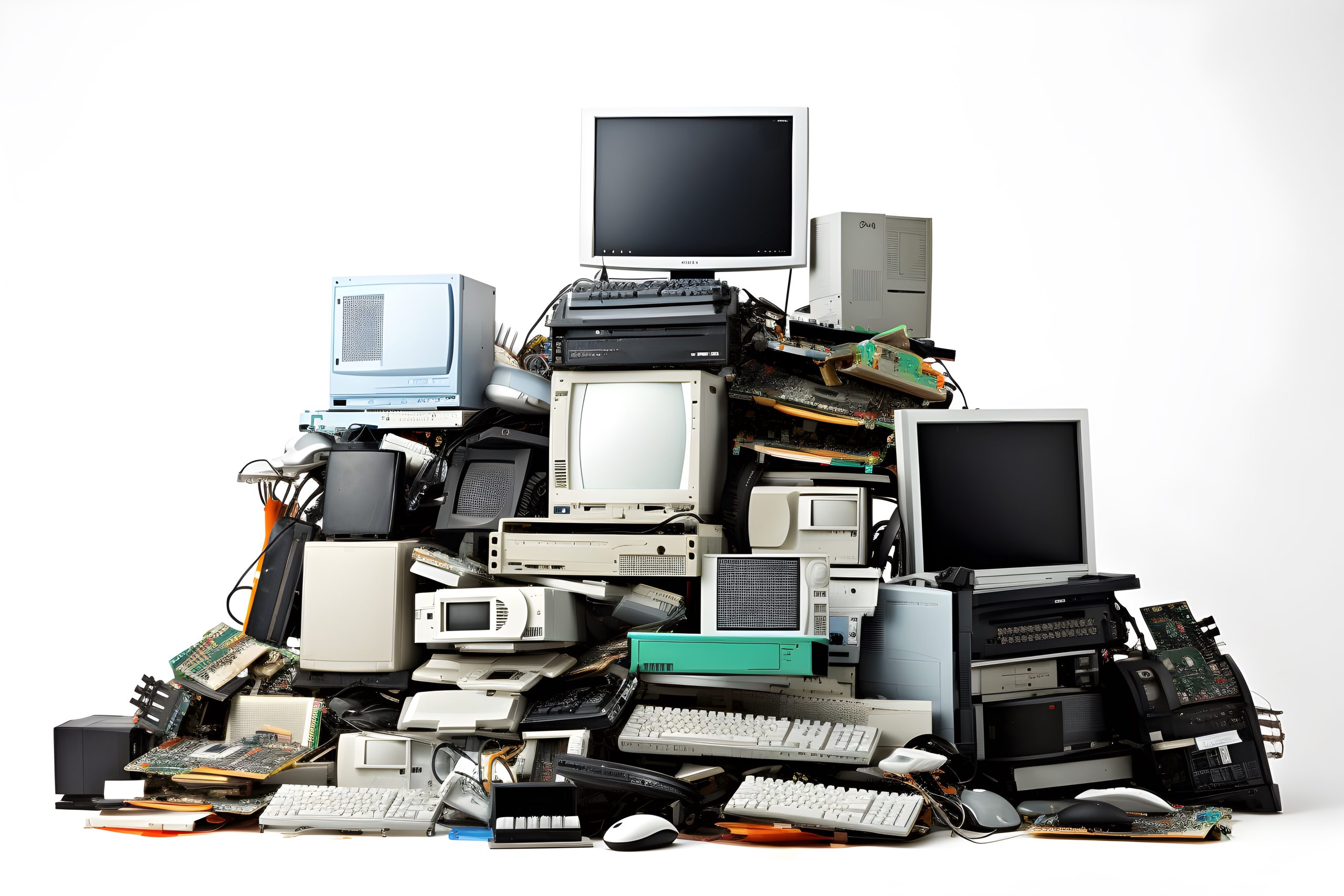
In our increasingly evolving digital world, electronic waste—commonly known as e-waste—is overtaking our landfills at an alarming rate. From outdated smartphones to defunct laptops as well as redundant servers, desktops and all manor of peripherals, this growing pile of discarded technology poses a significant threat to our environment. As responsible citizens and consumers, we must prioritise proper disposal methods and recycling options for our e-waste. Here at PaperMountains, we believe in creating a sustainable future, and that starts with understanding how to recycle our unwanted electronics.

What is E-Waste?
E-waste refers to any discarded electrical or electronic devices. Common sources include household gadgets like televisions, computers, phones, kitchen appliances, and even large items like refrigerators and washing machines. According to the Global E-waste Monitor, approximately 53.6 million metric tonnes of e-waste were generated in 2019 alone, and sadly, less than 20% of it was recycled properly.
Why is E-Waste Recycling Important?
Recycling e-waste is crucial for several reasons:
1. Environmental Protection: Devices often contain hazardous materials —including lead, mercury, and cadmium — that can contaminate soil and water if not disposed of properly. Recycling helps prevent these toxic substances from entering our ecosystem.
2. Conservation of Resources: E-waste recycling recovers valuable materials like gold, silver, and copper, which can be reused in manufacturing new products, reducing the need for raw material extraction.
3. Energy Efficiency: Recycling saves energy compared to producing new products from scratch. For instance, recycling aluminum saves 90% of the energy required to produce it from bauxite ore.
4. Legal Compliance: In the UK, the Waste Electrical and Electronic Equipment (WEEE) Directive mandates that businesses and individuals dispose of their e-waste responsibly. Non-compliance can lead to hefty fines.
How to Dispose of E-Waste Responsibly?
Step 1: Identify E-Waste
Begin by assessing your home or business for old or non-functional electronics. This includes: – Smartphones and tablets – Computers and peripherals – Televisions and monitors – Home appliances (microwaves, toasters, etc.) – Batteries and chargers
Step 2: Secure and Organise E-Waste
Once you’ve collected your e-waste, ensure that it is securely stored. If necessary, remove sensitive data from devices like computers and smartphones, either by performing a factory reset or using data-wiping software. This is something that PaperMountains can advise you on or undertake on your behalf with our GDPR compliant Hard Drive Shredding Service
Step 3: Choose an E-Waste Recycling Service
This is where PaperMountains comes in! Explore our WEEE disposal and IT recycling services to find out how we can help. We provide safe, responsible recycling options that adhere to UK regulations, ensuring that your e-waste is handled efficiently. Our services include: – Free collection services for businesses – Secure data destruction – Environmentally conscious disposal methods
Conclusion: Take Action!
As we navigate through our digital lives, it’s vital to remember our responsibility to the environment and the next generation. By ensuring that your e-waste is recycled correctly, you play a part in reducing waste, conserving resources, and protecting the environment.
At PaperMountains, we’re dedicated to promoting sustainable practices, and we encourage you to join us in making a positive impact. Whether you have a collection of old electronics or a single broken device, trust our professional services to handle your e-waste responsibly.
Let’s unplug e-waste together!
Visit our website for more information on e-waste recycling: Together, we can build a cleaner, greener future!
In This Series
This article is part of a series about the document scanning and workflow and how it can streamline, modernise and make a company more efficient.
<<< Previous Next >>>
Keep Me Up To Date
Fill out your email address bellow and we will let you know when another great article like this drops into the PaperMountains Digest and keep you up to date with whats happening at PaperMountains and News from the document management world in general.
Leave a Reply