
If you are searching for a paper shredder service near me, it usually means one thing: you have confidential paperwork that needs to be destroyed properly, without guesswork.
This guide explains how to choose a secure paperwork shredding service, what a good process should include, and the safest way to shred paperwork in a way that supports confidentiality, compliance, and responsible recycling.
Why secure shredding matters (and what counts as confidential)
Paper records often contain personal data, financial details, medical information, or commercially sensitive material. Once paperwork leaves your control, it can be difficult to prove what happened to it. That is why secure shredding is not just about cutting paper into strips. It is about controlling access to information from the moment you decide to dispose of it.
Examples of paperwork that is usually worth shredding include:
- Bank statements, invoices, and payment records
- Payslips, pension paperwork, and HR files
- Client records, case files, and contracts
- Medical letters and appointment paperwork
- School records and safeguarding-related paperwork
- Utility bills and letters showing your name and address
- Old ID copies, application forms, and insurance documents
If you are unsure, treat it as confidential until you have confirmed it is safe to dispose of it.
Home shredder vs paperwork shredding service
A home or office shredder can be fine for small volumes, but it can become slow, messy, and inconsistent. It also creates a new storage problem: bags of shredded paper that may still contain readable fragments if the cut is not fine enough.
A professional paperwork shredding service is usually a better fit when:
- You have a large clear-out, an office move, or an archive review
- You need a repeatable process for ongoing disposal
- You want a certificate of destruction for audit trails
- You want to reduce staff time spent feeding a shredder
- You need a clear chain of custody from collection to destruction
What a secure shredding service should include
When you compare providers, ask direct questions and look for clear, practical answers.
Controlled storage before destruction
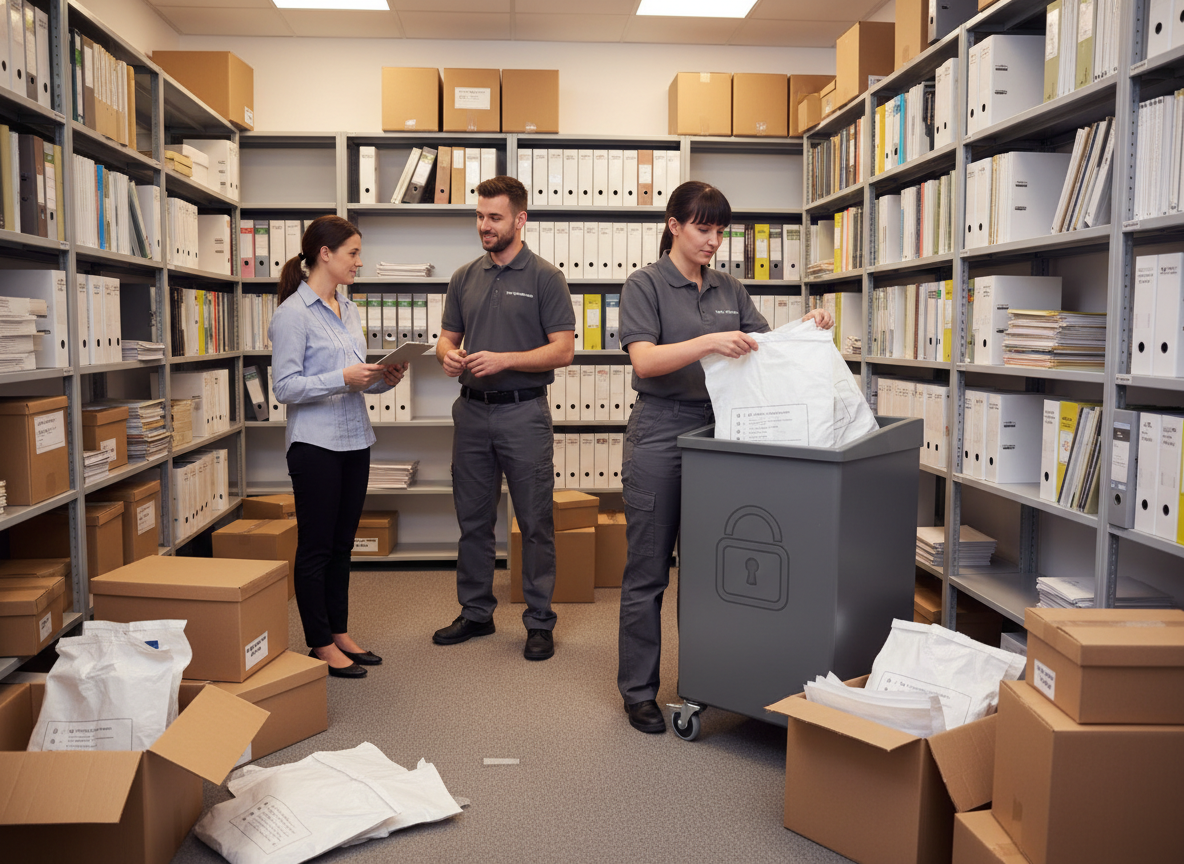
A secure service should offer a controlled way to store documents before destruction, such as locked consoles, secure bags, or sealed containers. The aim is to reduce casual access and prevent paperwork being left in open areas.
Chain of custody
Ask how paperwork is tracked from collection through to destruction. A strong chain of custody reduces the risk of loss, mix-ups, or unauthorised access.
Staff handling and access control
Find out who handles the documents, whether staff are vetted and trained, and how access is restricted. Fewer handoffs usually means lower risk.
Proof of destruction
Many organisations need evidence for internal policies, audits, or compliance records. Ask whether a certificate of destruction is available and what details it includes.
Recycling and responsible disposal
Secure destruction and environmental responsibility should work together. Ask what happens to the shredded paper afterwards and whether it is recycled.
The safest way to shred paperwork (step by step)
Use this checklist to keep the process simple and controlled.
- Sort what needs destroying
- Separate clearly confidential paperwork from general recycling.
- Remove obvious non-paper items if requested
- Some providers may ask you to remove bulky items such as ring binders or plastic sleeves.
- Keep paperwork in a controlled place until collection
- Avoid leaving boxes in shared areas where they can be accessed or moved.
- Book a secure service with a clear process
- Choose a provider that can explain how they protect paperwork during handling and transport.
- Request documentation if you need it
- If you need proof for compliance, ask for a certificate of destruction.
- Prevent the next backlog
- Set a schedule for reviews and destruction so paperwork does not build up again.
Quick questions to ask when searching “paper shredder service near me”
Before you book, ask:
- How is paperwork kept secure before destruction
- What is the chain of custody from collection to destruction
- Can you provide a certificate of destruction
- Do you support one-off clear-outs and regular collections
- What happens to the shredded paper afterwards

Choosing a provider: a practical decision checklist
If you are deciding between two or three options, use these criteria to make the choice clearer.
- Security: clear chain of custody, controlled storage, restricted access
- Compliance support: certificate of destruction and consistent documentation
- Convenience: collection options, frequency, and how easy it is to book
- Capacity: ability to handle your volume without delays
- Recycling: responsible handling of shredded material
Need a secure paperwork shredding service
If you want a secure, straightforward way to paperwork shredding service and you are comparing local options, you can read more about PaperMountains secure shredding and confidential paper destruction here:
If you prefer to speak in person call 01634 980204 to speak with a friendly, professional member of the PaperMountains team who will be able to assist with your enquiry.
Leave a Reply