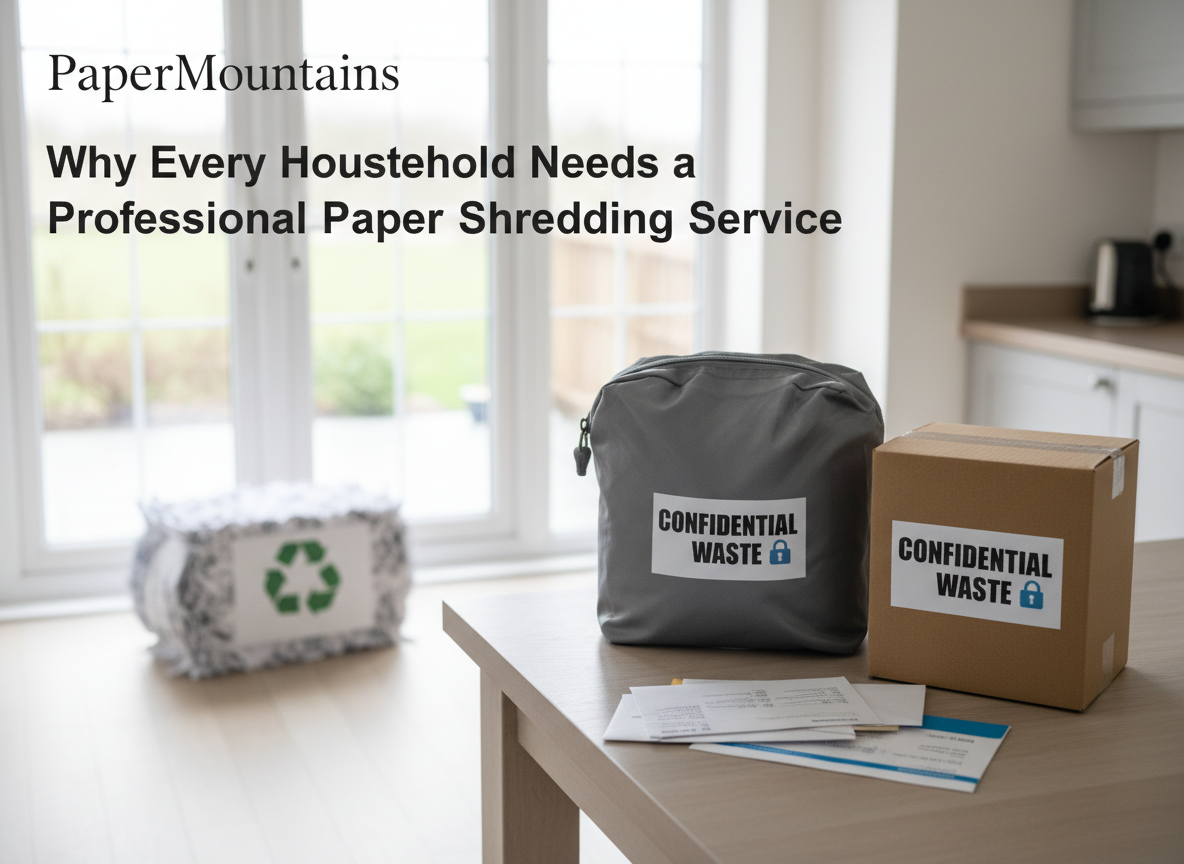

Most people know they should shred sensitive paperwork. Fewer people realise how quickly “a few bits of post” turns into a real risk. Bank letters, medical appointment notes, school documents, pension statements, insurance renewals, old utility bills, printed emails, even delivery labels can all contain enough personal data to cause problems if they end up in the wrong hands.
That is why using a residential paper shredding service is not just a tidy-up job. It is a practical way to protect your identity, reduce clutter, and make sure confidential information is destroyed properly, with a clear process you can trust.
The hidden data in everyday household paperwork
You do not need to be running a business to have confidential information at home. Most households handle documents that include:
- Full names, addresses, dates of birth
- Account numbers and reference numbers
- National Insurance details, payroll or pension information
- Medical or care-related information
- Children’s details from schools, clubs, or exam boards
- Signatures and barcodes that can be misused
Even if a document looks harmless, it may contain enough information to be pieced together. Identity fraud is not always about one “big” document. It is often about collecting small details over time.
Why home shredders often fall short
A home shredder can help, but it is rarely a complete solution. Common issues include:
- Capacity limits: household shredders struggle with bulk clear-outs, thicker paper, staples, or mixed items.
- Time and effort: feeding paper in small batches is slow, noisy, and easy to put off.
- Jam risk and wear: shredders overheat, jam, and break, especially during big declutters.
- Storage of “to shred” piles: many people keep bags or boxes of sensitive paperwork waiting for “when they have time”, which increases risk.
If you have ever found yourself with a growing stack of old statements or paperwork you keep meaning to deal with, you are not alone. The problem is not awareness. It is that the process is awkward, so it slips down the list.
The real benefit: certainty and control
A professional service is about removing doubt. You do not have to guess whether you shredded enough, whether the shred size is adequate, or whether you missed something important in the pile. You also avoid leaving confidential paperwork sitting around for weeks.
A personal paper shredding service gives you a straightforward route from “this needs to go” to “this is securely destroyed”, without the hassle of doing it all yourself.
When households most often need professional shredding
In practice, there are a few moments when paperwork builds up fast:
- Moving house or downsizing
Sorting through years of paperwork is stressful enough without worrying about what should be shredded and how to do it safely. - Clearing a home office
Many people now have printed records from remote work, old contracts, invoices, notes, and drafts that should not go in the recycling bin. - After bereavement or caring responsibilities
Handling another person’s documents can involve highly sensitive information. Secure destruction helps you manage it respectfully and safely. - Annual “life admin” clear-out
Tax-year paperwork, insurance renewals, and old banking documents tend to accumulate in drawers and folders.

What “secure shredding” should mean for a home service
If you are going to use a paper shredding service for home, it should be built around security and clear handling, not just convenience. Look for a service that treats household documents with the same seriousness as business records, including:
- Secure collection and handling procedures
- A clear chain of custody
- Destruction that is designed for confidential information
- Responsible disposal and recycling where possible
It is also worth choosing a provider that can handle the reality of household paperwork: mixed sizes, odd bundles, envelopes, staples, and the “I forgot about this folder” moments that always show up during a clear-out.
The cost of “probably fine” is usually too high
Many people assume the risk is low. But the consequences of personal data being misused can be time-consuming and expensive to fix. It can affect credit, create stress, and take months to untangle. Secure shredding is one of those preventative steps that feels small, but can save you a lot of trouble later.
What to expect from a professional home shredding service
A professional service should make secure destruction straightforward, even if you have years of paperwork to clear. In most cases, the process is designed to be simple:
- You gather the paperwork you want destroyed (from drawers, folders, boxes, loft storage, or a home office).
- It is collected securely and handled in a controlled way, rather than being left exposed.
- It is destroyed properly, so the information cannot be reconstructed.
- The waste is managed responsibly, with recycling where appropriate.
For households, the biggest difference is not just the shredding itself. It is the confidence that the whole journey from your home to destruction is treated seriously.
Find out more about what to look for in a personal paper shredding service near you in this, another of our indepth articles.
Why it is often the easiest option for busy households
People usually choose professional shredding for one of two reasons: they have too much paper, or they do not want the job hanging over them for weeks.
A service helps because it removes the bottlenecks that make home shredding drag on:
- No slow feeding of sheets into a small shredder
- No overheating, jams, or broken machines
- No “to shred later” piles sitting around the house
- No uncertainty about whether documents were destroyed thoroughly enough
If you are balancing work, family, and everything else, it is often more realistic to book a service and finish the job properly than to keep postponing it.
How to prepare your paperwork (without overthinking it)
Most households waste time trying to sort documents into perfect categories. You do not need to make it complicated. A practical approach is:
- Start with the obvious
Old bank statements, credit card letters, payslips, pension paperwork, medical letters, and anything with your signature or account references. - Clear the “miscellaneous” folders
The folders labelled “important” or “to file” often contain the most sensitive mix of documents. - Do a quick sweep of common hotspots
- Kitchen drawers (post and delivery labels)
- Home office shelves (printed emails, notes, old contracts)
- Loft/garage boxes (archived paperwork you have not opened in years)
- Keep only what you genuinely need
If you are unsure, set aside a small “check later” pile. Everything else can go for secure destruction.
If you have children, it is worth including old school letters, reports, and club paperwork. These often contain names, addresses, dates of birth, and other personal details.
Common questions households ask (and the practical answers)
“Do I need to remove staples or paper clips?”
Often you do not, but it depends on the service. If removing them is easy, do it. If it turns a simple clear-out into a fiddly project, it is usually better to keep momentum and ask the provider what they accept.
“What about envelopes?”
Envelopes can still show names and addresses, and window envelopes can reveal account details. If you are shredding the contents, shredding the envelope as well is sensible.
“How do I know I am not shredding something I will need?”
If you are worried, keep a small “review” folder and set a deadline to look at it. The bigger risk for most households is keeping everything forever because sorting feels too hard.
“Is it worth it for a small amount of paper?”
If it is genuinely a small amount, a home shredder might be fine. But many people underestimate how much they have until they start pulling files out of cupboards. If you have several bags, boxes, or years of paperwork, a professional service is usually the cleanest way to finish it.
Security and peace of mind: the part people value most
Household shredding is not only about privacy. It is also about peace of mind. Once the paperwork is dealt with, people often say they feel lighter, more organised, and less anxious about what is sitting in the house.
There is also a practical benefit: clearing paper frees up storage space, makes it easier to find the documents you do need, and reduces the chance of sensitive information being misplaced.
How To : book a secure home shredding collection
If you have confidential paperwork building up at home, it is worth dealing with it properly rather than letting it sit around for another year. A professional service gives you a clear, secure route to destruction, without the noise and hassle of doing it yourself.
Click link to arrange a secure home shredding service, visit or call 01634 980204 to discuss what you need and book your collection.
How professional shredding reduces risk in a way home shredders cannot
Most households do not experience data loss because they never shred anything. The more common issue is inconsistency. A few items get shredded, but plenty of paperwork slips through: an old folder you forgot about, a bundle of letters in a carrier bag, or documents you meant to deal with later.
A professional service reduces that “missed paperwork” risk because it is built for bulk. Instead of feeding paper in small batches, you can clear whole drawers and boxes in one go, then close the loop properly. That matters because personal information is rarely contained in one document. It is spread across years of post and records.
Using a personal paper shredding service also helps you avoid the weak points of home shredding, such as:
- Keeping sensitive paperwork in a “to shred” pile for weeks
- Shredding only the obvious pages and leaving the rest
- Throwing away envelopes or attachments that still show personal details
- Relying on a shredder that is not suitable for the volume you have
If you want a clear, repeatable way to protect your information, the best approach is to make secure destruction easy enough that you actually do it.
What to shred at home (a practical checklist)
If you are not sure what belongs in a shredding pile, this list covers the documents that most often cause trouble when they are thrown away intact:
- Bank statements, credit card letters, loan paperwork
- Utility bills and council tax letters
- Insurance documents (home, car, health, life)
- Pension paperwork and payslips
- Medical letters, prescriptions, appointment notes
- School letters, reports, and forms with children’s details
- Anything with a signature, barcode, or reference number
- Old ID copies, application forms, and printed emails
- Delivery labels, return slips, and address stickers
A useful rule: if a document links your name to an address, account, or personal identifier, it belongs in secure shredding.
How to keep household paperwork under control going forward
Once you have done a big clear-out, the next step is stopping the pile from rebuilding. A few simple habits help:
- Create a “shred box”
A small lidded box or folder in a home office is enough. The goal is to avoid leaving paperwork scattered around the house. - Set a regular review point
For many households, quarterly is realistic. If you prefer, tie it to a routine you already have, such as a seasonal clear-out. - Keep only what you need, and store it properly
Important documents should be filed in one place so you are not keeping duplicates “just in case”. - Be careful with printed emails and notes
These are easy to forget, and they often contain more information than you realise.
This is where a professional service can fit into your routine. If you know you can book a collection when your shred box is full, you are less likely to let paperwork build up for years.
If you have confidential paperwork sitting in drawers, folders, or boxes, it is worth sorting it now rather than carrying the risk for another year. A secure collection makes it easier to finish the job properly, without the noise, mess, and delays that come with home shredders.
Follow this link to book your home shredding collection or call 01634 980204 to discuss what you have and arrange a collection slot.
Keep Me Up To Date
Fill out your email address bellow and we will let you know when another great article like this drops into the PaperMountains Digest and keep you up to date with whats happening at PaperMountains and News from the document management world in general.
Leave a Reply